
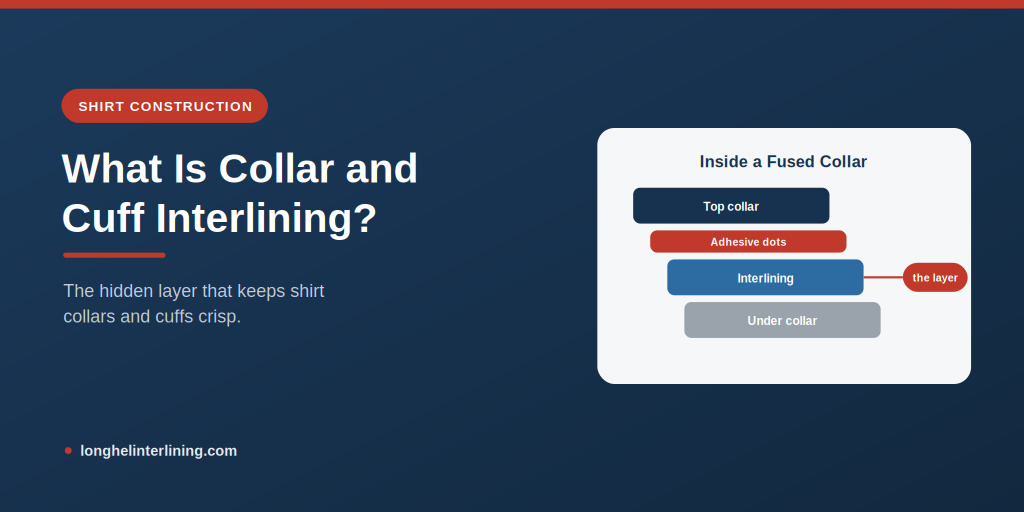
You know that shirt collar. Crisp and sharp the day you buy it. Then, a few washes later, the tips curl, the collar folds oddly, or it goes limp against your neck. The cuffs soften too, losing that clean edge. So what went missing? Almost always, it is the collar and cuff interlining. As a fusible interlining manufacturer, we get asked about this layer constantly. It is the hidden fabric that gives collars and cuffs their structure. In this guide, you will learn what collar and cuff interlining is, where it sits, why it matters, the main types, how it is applied, and how to choose the right one. By the end, you will know exactly what keeps a shirt looking sharp.
Collar and Cuff Interlining, Defined
Let’s start simple. Collar and cuff interlining is a support fabric bonded between the outer and inner layers of a shirt’s collar and cuffs. You never see it, yet it does most of the structural work.
It sits inside three key spots: the collar leaf, the collar band, and the cuffs. In each place, it adds strength and helps the part hold its shape.
Think of it as a stiffening core. The outer cloth gives the look, while the interlining underneath gives the backbone. For a closer look at the options, see our guide to interlining for shirt collars. Without this layer, a collar has nothing to keep it standing, so it simply follows the soft cotton and collapses.
Where Does It Sit In A Shirt?
To see why this layer matters, it helps to know the parts of a collar. A shirt collar is not one piece. It is two.
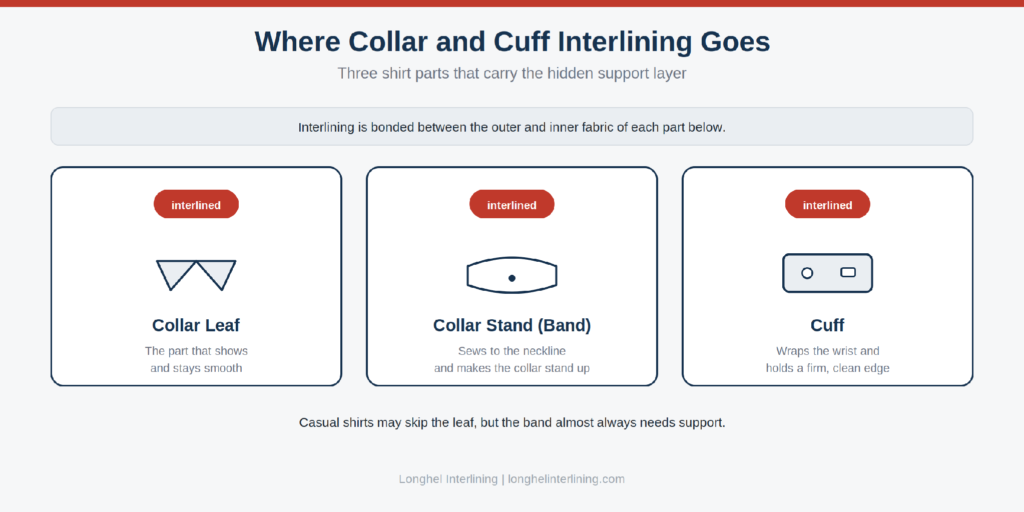
The collar band, or stand, is the strip that sews to the neckline and wraps your neck. It is the part that makes the collar stand up. The collar leaf is the wider flap that folds over the band and shows on the outside.
Both parts get interlining, and so do the cuffs. In fact, the collar stand is almost always reinforced with fusible interlining to hold its shape. The table below breaks it down.
| Shirt Part | Its Job | Why It Needs Interlining |
|---|---|---|
| Collar leaf | The visible flap that folds over | Must stay smooth and flat |
| Collar stand (band) | Sews to the neckline and stands up | Needs firm support to hold shape |
| Cuff | Wraps the wrist | Takes daily stress, keeps an edge |
| Front placket (nearby) | Holds the buttons | Usually a lighter, softer type |
Why Does It Matter?
So why bother with a layer nobody sees? Because it decides how the shirt looks and how long it lasts. Here is what collar and cuff interlining does for a shirt:
- Keeps collars crisp. The collar stands up and holds its line all day, not just on the hanger.
- Firms up the cuffs. They keep a clean edge instead of going soft and shapeless.
- Reinforces stress points. Collars and cuffs take constant folding, buttoning, and washing.
- Holds shape through washes. The structure survives the laundry, not only the shop floor.
- Delivers a polished look. A sharp collar reads as quality the moment someone sees it.
Because collars and cuffs need more structure than the shirt body, they usually take a firmer, hard-feel type. The body and placket then use a softer one, so the shirt stays comfortable where it should.
Types Of Collar And Cuff Interlining
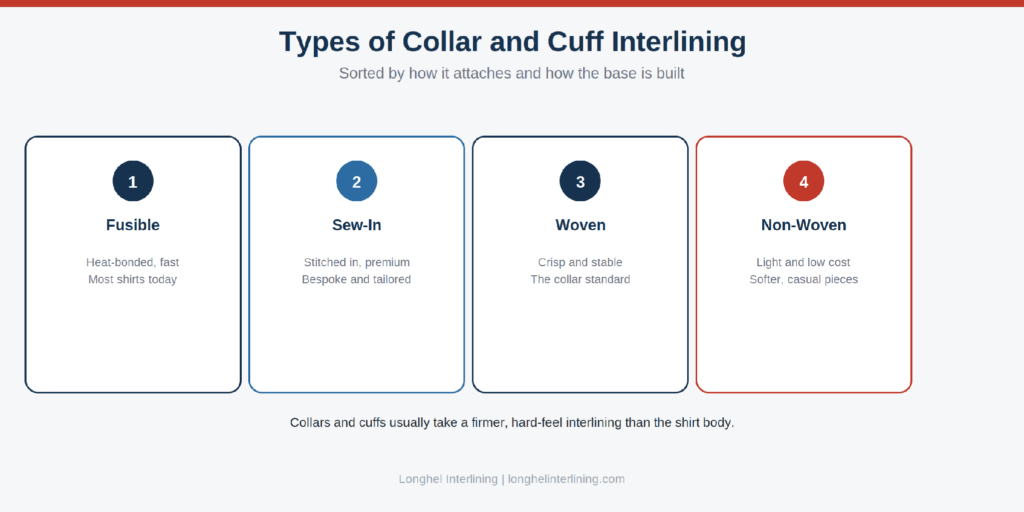
There is no single type. The right choice depends on the shirt. Makers sort the options two ways: how it attaches, and how the base is built.
Fusible vs Sew-In
Fusible interlining bonds with heat. It is fast, consistent, and used on most shirts today, especially ready-to-wear. Sew-in interlining gets stitched into the seams instead. It costs more, but it gives a softer, more refined result, which is why bespoke shirtmakers favour it. Some high-end collars even use woven canvas or horsehair. For a wider view, see our guide to types of interlining for shirts.
Woven vs Non-Woven
The base fabric matters too. Woven interlining is crisp, stable, and the standard for collars and cuffs. Non-woven is lighter and cheaper, so it suits casual or budget shirts. Knit interlining stays soft and stretchy for jersey pieces. For a firm dress collar, though, woven almost always wins.
How Collar And Cuff Interlining Is Applied
For fusible types, the process is quick but precise. A worker places the coated side of the interlining against the wrong side of the collar or cuff fabric. A heated press then bonds them with the right mix of temperature, pressure, and time.
On a collar, this fuses the top collar, the interlining, and the under collar into one firm panel. Miss the settings, and the bond fails.
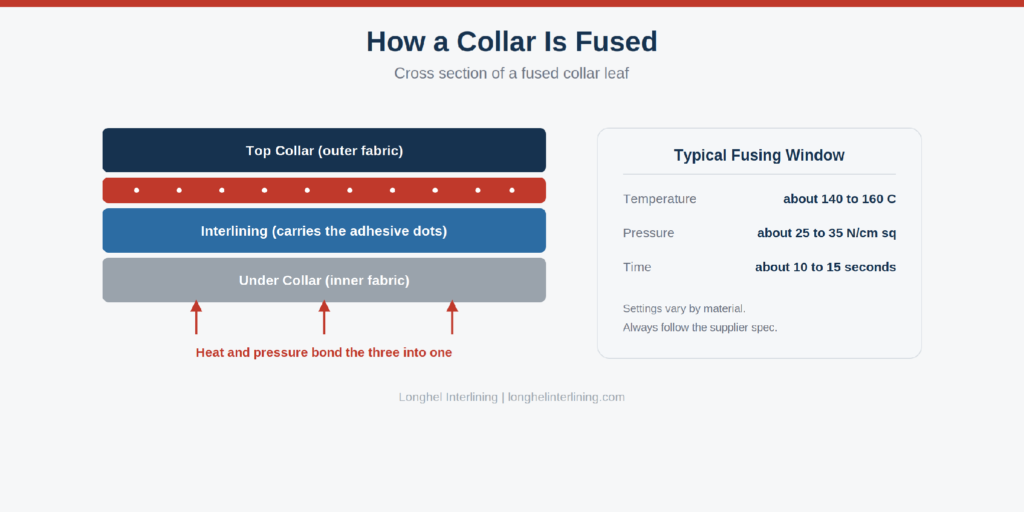
Typical fusing runs around 140 to 160 degrees C, at roughly 25 to 35 newtons per square centimetre, for about 10 to 15 seconds. These numbers shift by material, so always follow your supplier’s spec. We cover the full method in how to fuse interlining. Sew-in interlining skips the glue entirely. Skilled hands stitch it into the seams, which takes longer but lasts beautifully.
Which Type Should You Choose?
Start with the shirt, then work back to the interlining. Match it to the fabric, the formality, and the wash.
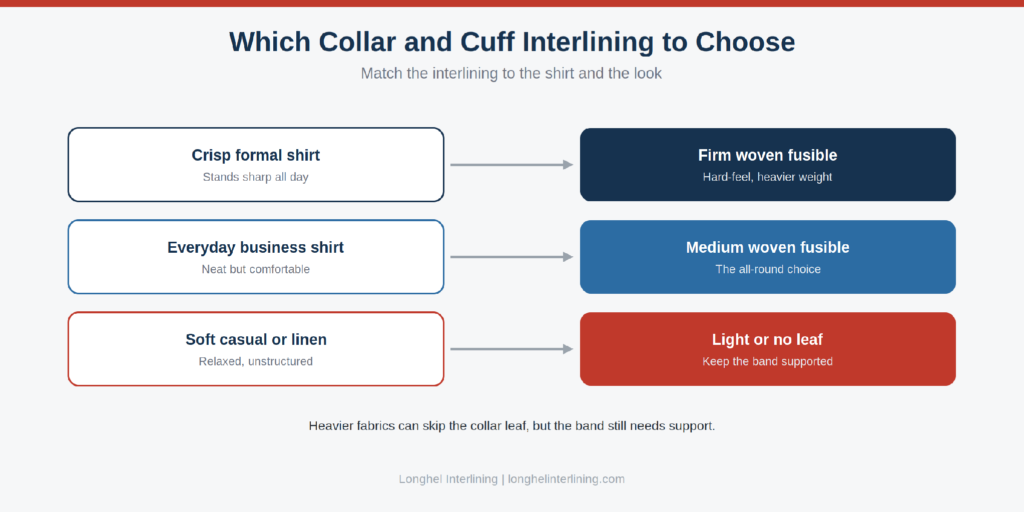
For a crisp formal shirt, pick a firm woven fusible in a heavier, hard-feel weight. For an everyday business shirt, a medium woven fusible gives neat structure with comfort. For a soft casual shirt or linen, go light, or skip the leaf entirely and just support the band.
One rule holds across all of them. Heavier fabrics can often skip interlining on the collar leaf, but the band still needs support to stand. When in doubt, test on your actual fabric first. Our shirt interlining guide walks through weights and materials in detail.
When It Goes Wrong
Even the right interlining can spoil a collar if the process slips. A few faults show up most often, and each one has a clear cause.
Bubbling, also called delamination, is the classic one. The collar looks fine in the factory, then puckers after a wash. Cardboard stiffness comes from too heavy a weight or too much heat. And curling tips usually mean weak or poorly bonded interlining.
The fixes are simple. Match the coating to the wash, control the fusing settings, and buy quality interlining. Get those three right, and the collar stays sharp for years.
TL;DR
Short on time? Here is the whole thing in five lines:
- Collar and cuff interlining is the hidden support layer bonded inside a shirt’s collar and cuffs.
- It keeps collars crisp, firms the cuffs, and holds shape through washing.
- The collar has two parts, the band and the leaf, and both get interlining.
- Types split into fusible or sew-in, and woven or non-woven, with woven the collar standard.
- Match the weight to the shirt, control the fusing, and test before you scale up.
Conclusion
So, what is collar and cuff interlining? It is the quiet layer that turns soft cloth into a sharp, structured collar and a firm, clean cuff. You never see it, but you notice the moment it is missing.
Get it right and your shirts look professional and last through years of washing. Choose the wrong type, or fuse it poorly, and even great fabric will disappoint. The collar is the first thing people see, so the layer behind it is worth getting right.
Frequently Asked Questions
Is Collar And Cuff Interlining The Same As Interfacing?
Mostly, yes. Interfacing is the broad term for any structuring layer, while interlining often refers to the support added during construction. In shirt collars and cuffs, the two words are used for the same material.
Can You Wash Shirts With Collar Interlining?
Yes, when the coating suits the wash. Polyester-based glues handle hot washing well, while polyamide suits gentler care. A mismatch is what causes bubbling, so always check the shirt’s care label.
Why Does My Collar Curl Or Bubble?
Curling and bubbling both point to the interlining. Curling usually means weak or missing support at the tips. Bubbling means the bond failed, often from poor fusing or a coating that did not match the wash.
Do All Shirts Have Collar And Cuff Interlining?
Not all. Soft, casual, and linen shirts sometimes skip it on the collar leaf and cuffs. Even then, the collar band usually keeps some support so the collar can still stand.
Fusible Or Sew-In: Which Is Better For Collars?
Neither wins outright. Fusible is faster, cheaper, and consistent, so it runs most shirts. Sew-in costs more but gives a softer, premium hand, which is why bespoke makers choose it.
Get Collar And Cuff Interlining That Holds Its Shape
Need collar and cuff interlining that keeps its shape wash after wash? Longhel Interlining is a China-based manufacturer of woven fusible and non-fusible interlinings for shirts, suits, ladies’ fashion, jackets, shoes, and hats. You get factory-direct quality, quick shipping, and free samples so you can test before you commit.
Get an instant quote today, or browse our product range to find the right match for your shirts. Not sure which to pick? Talk to our team and we will help you choose.