
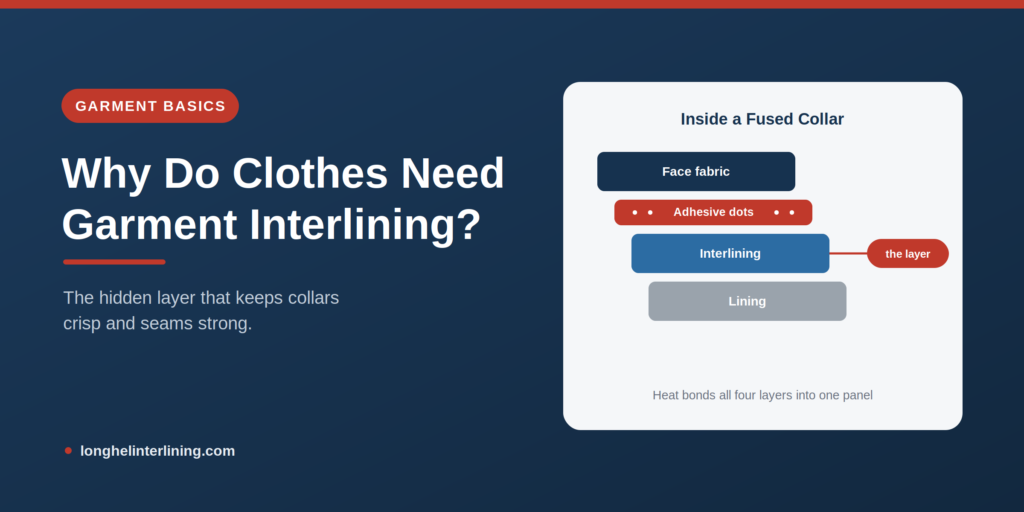
Ever pulled a jacket off the rack, loved how sharp it looked, then watched it go shapeless within a month? Or had a shirt collar fold over on itself after two washes? That sinking feeling is almost never about the outer cloth. It traces back to one layer most people never think about: garment interlining.
As a fusible interlining manufacturer, we see this play out every day. Get the interlining right and a garment holds its shape for years. Get it wrong and even lovely fabric falls apart. So let me walk you through it. We will cover what interlining is, why your clothes truly need it, where it hides, the main types, how it goes in, and what happens when it fails. By the end, you will see your wardrobe a little differently.
What Is Garment Interlining, Exactly?
Garment interlining is a layer of support fabric. It sits between the outer cloth (the face fabric) and the lining of a garment. You never see it. That is the whole idea.
Think of it as the frame inside a building. The walls and paint get all the attention. The frame is what keeps everything standing.
People often mix interlining up with lining and interfacing. They are not the same thing, even though the words get tossed around loosely. If that distinction trips you up, we broke it down in our guide to lining versus interlining.
In short, the lining is the smooth inner layer you can see and touch. The interlining hides between the layers and does the structural work.
Why Do Clothes Need Interlining?
Here is the heart of it. Cloth on its own cannot hold a shape. Weave it into a collar and it flops. Cut it into a waistband and it rolls. Interlining fixes that.
Pull the interlining out of a garment and a few things go wrong fast:
- The shape collapses. Collars curl, lapels sag, and plackets buckle under the weight of the buttons.
- Stress points give out. Buttonholes and pockets stretch, fray, and tear far sooner than they should.
- The fabric warps. With no backing, it twists and puckers during sewing and washing.
- The drape turns cheap. A blazer that should fall cleanly ends up hanging like a sack.
- The lifespan drops. Unsupported panels wear thin in a fraction of the time.
None of this is small. For a brand, one shipment of collapsing collars means returns, refunds, and a dent in your reputation. So interlining is not a finishing touch. It is structural insurance, built into the garment from the very start.
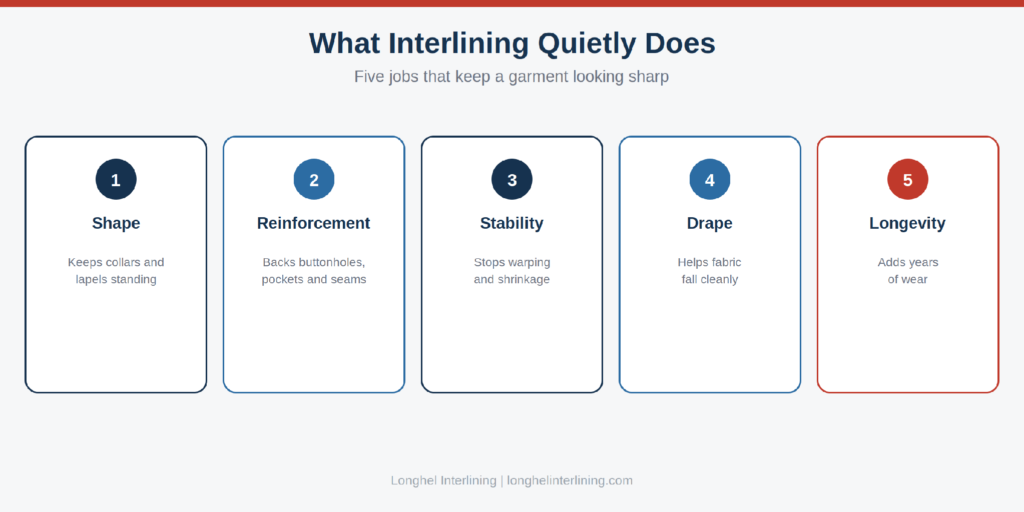
Figure 1: Five jobs interlining performs inside almost every structured garment
What Does Interlining Do? A Quick Map
Different parts of a garment ask for different things. The table below maps the common zones, the job interlining does in each, and the type that usually fits best.
| Garment Zone | What Interlining Does There | Common Choice |
|---|---|---|
| Shirt collar | Keeps it standing and crisp all day | Medium woven fusible |
| Cuffs | Holds a firm edge through wear and washing | Woven fusible |
| Front placket | Supports buttons and buttonholes under stress | Woven or non-woven fusible |
| Jacket front and lapel | Shapes the chest and keeps lines clean | Woven fusible or sewn canvas |
| Waistband | Stops rolling and stretching | Heavy fusible |
| Knit tops | Adds light structure without killing the stretch | Knit (tricot) fusible |
Where Does Interlining Hide In Your Clothes?
You will not find interlining spread across a whole garment. That would feel stiff and waste material. Makers place it only where structure truly matters.
On a shirt, that means the collar, the cuffs, and the front placket. On a jacket, it backs the front panels and the lapels. On trousers and skirts, it firms up the waistband.
The rule is simple. Wherever a garment must stay crisp, take tension, or hold a shape, interlining belongs there. Everywhere else, the fabric is left free to move.
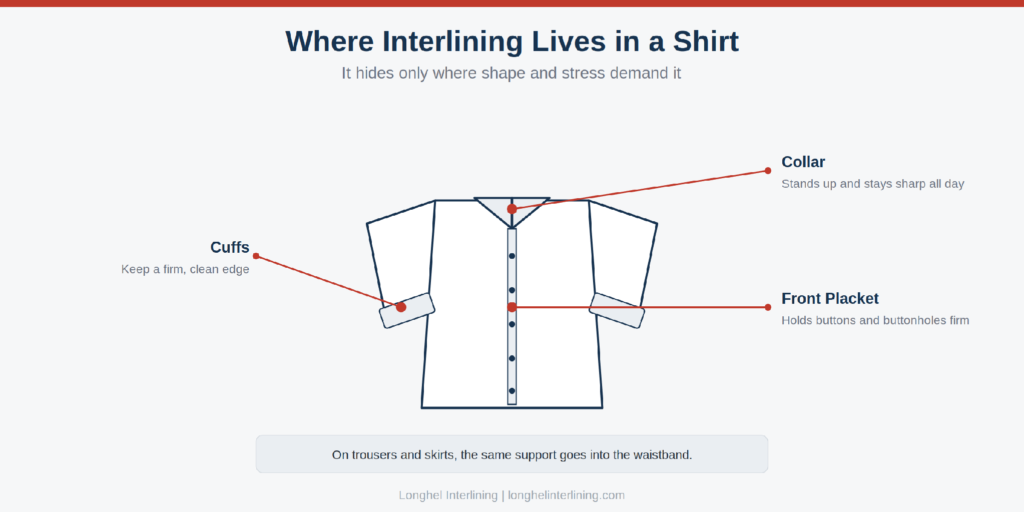
Figure 2: Interlining sits only in the high-stress, shape-critical zones of a shirt.
Which Type Of Garment Interlining Does The Job?
There is no single best interlining. The right pick depends on the fabric and the garment. Makers sort the options two ways: how the base is built, and how it attaches.
Types Of Garment Interlining By Construction
- Woven. Cotton or polyester yarns woven together. Stable, crisp, and dependable. It rules shirts and suits.
- Non-woven. Fibres bonded into a sheet. Cheaper, lighter, and grain-free, so it cuts in any direction. Great for casual and high-volume runs.
- Knit. A stretchy tricot base. It moves with the cloth, which makes it the natural match for jersey and activewear.
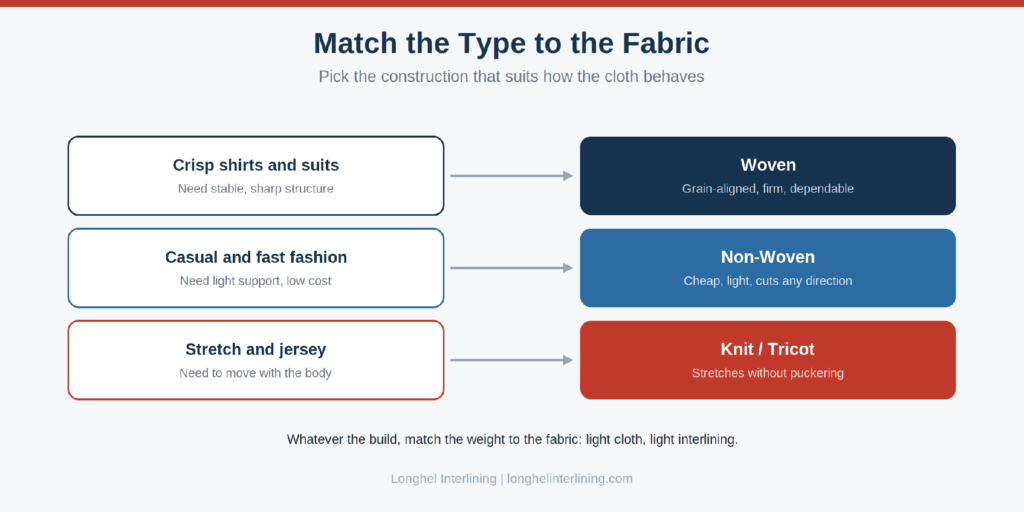
Figure 3: Match the construction to how the fabric needs to behave.
Garment Interlining By Attachment: Fusible Or Sew-In
This is the choice most buyers make first, because it sets both your cost and your hand feel.
Fusible interlining bonds with heat. It is fast, consistent, and built for scale, so it runs most modern garments. Sew-in interlining gets stitched into the seams instead. It costs more in labour but rewards you with serious durability and a softer, more natural drape.
Want the full breakdown for shirts? We go deep on weights, materials, and selection in our shirt interlining guide.
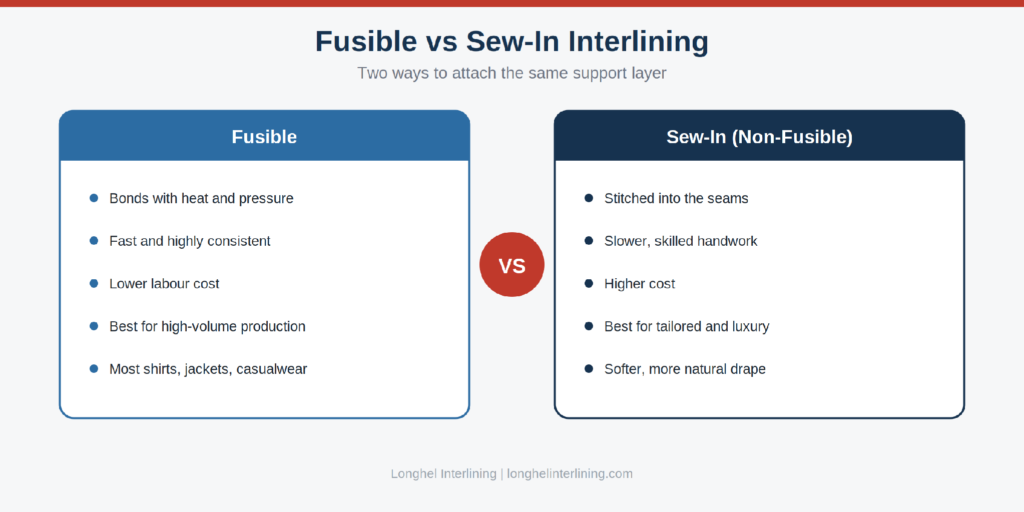
Figure 4: Fusible and sew-in attach the same support layer in very different ways.
How Does Interlining Go Into A Garment?
For fusible types, the process is quick but precise. A worker lays the coated side of the interlining against the back of the fabric. A heated press then bonds the two with the right mix of temperature, pressure, and time. Miss any one of those and the bond fails.
Sew-in interlining skips the glue entirely. Instead, skilled hands stitch the layer into the seams. It takes longer, but it holds up beautifully over years of wear.
If you want the full step-by-step on bonding, we covered it in how to fuse interlining.
When Interlining Goes Wrong (And How To Avoid It)
Even good materials fail when the process slips. The most common problem is bubbling, also called delamination. The collar or front looks perfect in the factory, then puckers after a single wash.
A few things tend to cause it:
- The fusing temperature ran too low or too high.
- The pressure was uneven across the panel.
- The glue did not match the wash method, so it let go in hot water.
- The interlining and the fabric shrank at different rates.
The fixes are straightforward. Match the coating to the care label. Test every fabric before a full run. And buy from a supplier who controls quality instead of cutting corners. We dug into the root causes in why interlining bubbles after bonding.
TL;DR
Short on time? Here is the whole thing in five lines:
- Interlining is the hidden support layer between a garment’s face fabric and its lining.
- Clothes need it for shape, reinforcement, stability, drape, and a longer life.
- It lives in collars, cuffs, plackets, lapels, and waistbands, not across the whole garment.
- Pick the build (woven, non-woven, knit) and the method (fusible or sew-in) to suit the fabric.
- Bad fusing causes bubbling, so match the coating and test before you scale up.
Conclusion
So, why do clothes need interlining? Because cloth alone cannot hold a shape, take stress, or last. This quiet layer does all three, and it does the work where nobody ever looks.
Next time a collar stays sharp through a long day, you will know exactly what to thank. Choose the right garment interlining and your garments look better, feel better, and last longer. Choose poorly and the whole piece suffers. It really is that simple.
Frequently Asked Questions
Do All Clothes Have Garment Interlining?
No. Soft, unstructured pieces like basic tees often skip it. Structured garments like shirts, suits, and coats rely on it heavily. It shows up wherever shape and support matter.
Is Interlining The Same As Lining?
No. Lining is the smooth inner layer you can see and feel. Interlining hides between the layers and adds structure. They do completely different jobs.
Can You Wash Clothes With Interlining?
Yes, as long as the coating suits the wash. PES glues handle hot machine washing. PA glues prefer dry cleaning. A mismatch is what causes bubbling, so always check the care label.
Does Interlining Make Clothes Stiff?
Only if you pick the wrong weight. Matched well, it adds clean structure without stiffness. Light fabrics take a light interlining, and heavier fabrics take more.
Why Does My Collar Bubble After Washing?
That is delamination. The bond failed, usually from poor fusing, a coating mismatch, or low-grade material. Good interlining and correct settings keep it flat.
Get Interlining That Holds Its Shape
Tired of collars that wilt and waistbands that roll? Longhel Interlining is a China-based manufacturer of woven fusible and non-fusible interlinings for shirts, suits, ladies’ fashion, jackets, shoes, and hats. You get factory-direct quality, quick shipping, and free samples so you can test before you commit.
Get an instant quote today, or browse our full product range to find the right match for your fabric. Not sure where to start? Talk to our team and we will help you choose.